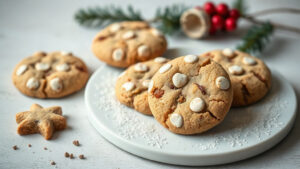
Butter creamed into sugar, a splash of milk, a brush of egg wash—dairy hides in almost every classic holiday cookie. So how do you bake Dairy-Free Christmas Cookies that still taste rich and buttery? It takes a few smart swaps, not a whole new skill set.
Quick answer: Replace butter with a plant-based block butter that lists 80% or more fat, use oat or soy milk in place of dairy milk, and check every add-in—chocolate chips, sprinkles, and extracts—for milk or whey. Weigh your flour, chill the dough, and most traditional recipes convert with no loss of texture.
This guide explains what dairy-free baking actually involves, why it matters for guests and family, the practices that work, and the mistakes that ruin a batch. You will finish knowing how to build a holiday cookie plate everyone can enjoy.
What is Dairy-Free Christmas Cookies?
Dairy-Free Christmas Cookies are holiday cookies made without milk, butter, cream, cheese, or any ingredient derived from them. That includes less obvious items such as whey powder, milk solids, casein, and ghee. The category covers the whole holiday spread: sugar cookies, gingerbread, shortbread, spritz, thumbprints, and chocolate crinkles.
The term describes an ingredient standard, not a flavor. "Dairy-free" on a label means no milk ingredients were used. It does not guarantee the cookies are vegan, because eggs may still be present. It also does not mean the cookies are automatically allergen-safe. Cross-contact in a home kitchen or a shared factory line is a separate concern.
For anyone new to the category, the practical test is the ingredient list, read line by line. Milk shows up under many names—butterfat, caseinate, curds, whey, milk powder—and a product can call itself nondairy while still containing milk protein. When in doubt, contact the manufacturer rather than trusting a front-of-package claim, because labeling rules for "nondairy" and "dairy-free" are not identical everywhere.
Dairy-Free vs. Vegan vs. Lactose-Free
These three labels get used interchangeably, and they should not be.
- Dairy-free: no milk-derived ingredients. Eggs, honey, and gelatin may still appear.
- Vegan: no animal products at all, including eggs and honey. Most vegan cookies are dairy-free, but not every dairy-free cookie is vegan.
- Lactose-free: milk is present, but the lactose sugar has been removed or predigested. These cookies are not dairy-free and are unsafe for a milk allergy.
If you are baking for someone with a milk allergy, treat "lactose-free" as a red flag, not a substitute. For someone who is simply avoiding dairy by choice, a lactose-free product may be fine.
Which Cookies Naturally Qualify
Some holiday favorites are dairy-free by tradition. Others need one or two swaps.
| Cookie type | Typical dairy ingredient | Easy swap |
|---|---|---|
| Gingerbread cutouts | Butter | Plant-based block butter |
| Sugar cookies | Butter, milk | Block butter, oat milk |
| Chocolate crinkles | Butter | Neutral oil or block butter |
| Shortbread | Butter | High-fat plant butter |
| Thumbprints | Butter, milk glaze | Block butter, coconut cream |
Notice the pattern: fat is the main variable. Where butter carries structure, you need a solid plant butter. Where it only adds richness, oil often works.
Butter does two jobs in a cookie—it tenderizes and it tastes like butter. A plant butter at 80% fat does both. A tub spread at 40% fat does neither well.
Why Dairy-Free Christmas Cookies matters
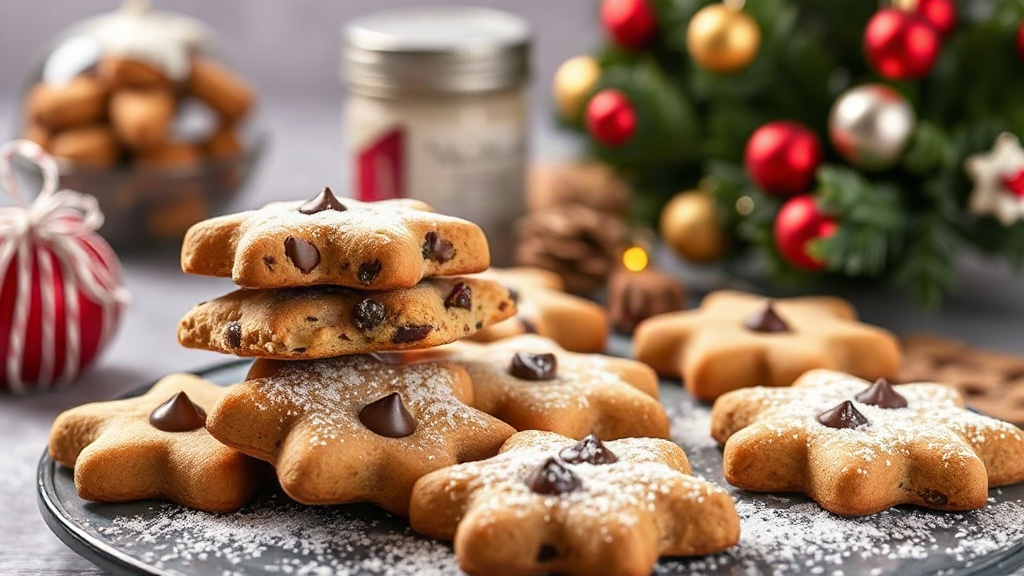
Holiday baking is social. Cookies go to parties, get packed into tins, and land on dessert tables where nobody asks who made them. A milk allergy affects roughly a small share of children and adults, and for those households a single cookie can mean a medical emergency. Baking one dairy-free option is not a niche gesture; it is hospitality.
The practical reasons stack up quickly:
- Inclusion: a guest with a milk allergy can eat from the same plate as everyone else.
- Cost: plant butter, oil, and oat milk are ordinary grocery items, not specialty purchases.
- Flavor: gingerbread, spice cookies, and chocolate crinkles lose nothing without dairy.
- Flexibility: one dough often covers several cookie shapes, so you bake less and serve more.
There is a texture argument too. Shortbread made with a good plant butter browns and crisps the same way. Crinkle cookies made with oil stay fudgy for days. The swap rarely announces itself.
That matters most at a buffet, where serving spoons travel between platters. A dairy-free cookie stacked beside a butter cookie picks up crumbs and smears. Set the dairy-free batch on its own plate with its own tongs, and place it slightly apart from the rest so guests do not cross-contaminate it by accident.
The Allergy Reality
A milk allergy is one of the more common food allergies in young children, and reactions range from hives to anaphylaxis. Trace amounts matter. A cookie cutter dusted with flour from a buttered pan, a shared rolling pin, or a whisk with dried cream in the tines can carry enough protein to trigger a reaction in a sensitive person.
Wash bowls, beaters, and rolling pins in hot soapy water before dairy-free baking. If you also bake with butter, finish the dairy-free batch first or use separate tools.
The Social Side of a Shared Plate
Consider a typical family: one cousin avoids dairy, and the host bakes three kinds of cookies. If all three contain butter, the cousin gets nothing. If one tray is dairy-free and clearly labeled, everyone eats and nobody feels singled out. That is the whole point.
A label helps, too. A small card reading "dairy-free gingerbread" prevents the awkward question and the accidental bite.
Best practices
Good dairy-free baking comes down to fat choice, flour accuracy, and temperature control. Get those three right and most recipes convert cleanly on the first try.
Keep a small notebook of what worked: the brand of block butter, the weight of flour, the chill time, and the exact bake minutes. Plant butter formulas differ enough between brands that a swap can change spread and browning, so a written record saves you from re-testing the same dough every December.
Choose the Right Fat
Use a plant-based block butter with at least 80% fat for creamed cookies, shortbread, and anything that needs to hold a shape. Look for products sold in sticks or blocks, not tubs. Coconut oil works for some recipes but turns hard when chilled and soft at room temperature, which changes how dough spreads.
For crinkles, brownies, and drop cookies, a neutral oil such as canola or light olive oil gives a chewier result. Match the fat to the job rather than swapping one-for-one everywhere.
Weigh Your Flour and Chill the Dough
Scoop-and-level measuring can add 20% more flour than a recipe intends, and extra flour makes cookies dry and crumbly. A digital scale removes the guesswork. If you do not own one, spoon flour into the cup and level it with a knife.
Chilling matters more with plant butter. Rest cutout dough for at least one hour in the fridge so the fat firms up and the cookies keep their edges. Skip this step and your snowmen turn into puddles.
Read Every Label
Dairy hides in unexpected places:
- Chocolate chips often contain milk fat or milk solids.
- Sprinkles and sanding sugar can carry a milk-based glaze.
- Some extracts and flavorings include cream or butter.
- Bread crumbs and graham crumbs may contain butter.
Check the allergen statement, not just the ingredient list. "May contain milk" is a warning about shared equipment, which matters for allergy households.
Start with the dairy-free dough while your bowls and tools are clean. Then bake the butter version. This order avoids rewashing everything twice.
Common mistakes to avoid
Most failed dairy-free batches trace back to one of a handful of errors. None of them are mysterious, and all of them are fixable.
A dough that never firms up often signals too much liquid, not too little flour. Oat and soy milk pour more freely than dairy milk, and a splash too many turns cutout dough sticky and hard to roll. Add liquid a tablespoon at a time and stop as soon as the dough pulls cleanly from the bowl. If it is already too wet, pat it into a disk, chill it for thirty minutes, and dust lightly with flour when rolling rather than dumping in extra dry measure.
Ignoring oven hot spots is another quiet culprit. Plant butter browns faster than dairy in some ovens, so rotate the tray halfway through and set a timer five minutes under the recipe’s stated time. An oven thermometer costs little and settles arguments about whether 350°F is really 350°F.
Swapping Fat Without Adjusting
Replacing butter with a 40% fat tub spread adds water and removes structure. Cookies spread thin, brown too fast, and taste flat. The fix is simple: buy block butter, not spread. If a recipe calls for melted butter, use oil; if it calls for softened butter, use block plant butter.
Forgetting Hidden Dairy in Add-Ins
You can bake a perfect dairy-free dough and ruin it with a handful of chocolate chips that contain milk solids. Read the label on every add-in, including white chocolate, caramel chips, and colored sugar. This is the single most common mistake home bakers make.
Overmixing and Overbaking
Plant butters vary in how they cream, so watch the dough rather than the clock. Stop mixing once the flour disappears; extra mixing develops gluten and makes cookies tough. Pull the tray when the edges are set and the centers still look soft. They finish cooking on the hot pan.
Skipping the Rest and the Label
Two small habits prevent most problems. Chill cutout dough so shapes hold, and label the finished tin. An unlabeled dairy-free cookie on a mixed platter may get avoided for the wrong reason, or eaten by someone who assumed it was the butter version.
FAQ
Are Dairy-Free Christmas Cookies more expensive to make?
Usually only slightly. Plant block butter costs a bit more per stick than dairy butter, but oil-based recipes are often cheaper. The bigger cost driver is specialty allergen-free chocolate and sprinkles, so compare store brands before assuming a premium.
Can I make dairy-free cookie dough ahead of time?
Yes. Most doughs keep in the fridge for two to three days or in the freezer for up to two months. Wrap it tightly and thaw overnight in the fridge before rolling. Chilled dough is easier to cut and holds shape better.
How do I stop dairy-free sugar cookies from spreading?
Use block butter at 80% fat or higher, chill the dough for at least an hour, and roll it to an even thickness. Also check your baking sheet—a warm pan spreads dough fast, so let it cool between batches.
Do dairy-free cookies taste different?
Most people cannot tell the difference, especially in spiced or chocolate cookies. Shortbread is the toughest test because butter flavor is the whole point. A cultured plant butter gets closest to the real thing.
Can I use coconut oil for every cookie recipe?
No. Coconut oil works well in crinkles and some shortbread, but it hardens sharply when cold and softens quickly at room temperature. For creamed doughs and cutouts, block plant butter is the safer choice.
Conclusion
Dairy-Free Christmas Cookies come down to three habits: choose a high-fat block butter, weigh your flour and chill the dough, and read the label on every add-in. Do those and your holiday spread works for every guest at the table, without a separate dessert plate or an apology.
Start with one recipe this week—gingerbread is the most forgiving—and taste it before the holiday rush. Once that batch works, convert your sugar cookies and shortbread the same way. For a broader holiday plan, see our related guide on building a full cookie tray.
